Whether you are establishing a backyard garden, a community plot, or an indoor sanctuary, mastering the cultivation of Sage requires a deep understanding of its biological preferences. As a distinct aromatic herbaceous species, Sage rewards meticulous growers with abundant volatile essential oils and dense foliage. This comprehensive guide synthesizes peer-reviewed agronomy, university extension data, and practical horticultural wisdom to provide you with an actionable, step-by-step roadmap for growing Sage.
1. Botanical Overview and Ideal Growing Conditions
Before breaking ground, it is critical to align your environmental conditions with the evolutionary preferences of Sage.
Sunlight and Photoperiod
Most varieties of Sage are highly responsive to solar radiation. They generally require 6 to 8 hours of direct, unobstructed sunlight daily. Insufficient light leads to etiolation (leggy stems), compromised immune responses, and significantly reduced volatile essential oils and dense foliage. If cultivating indoors, full-spectrum LED lighting must replicate the intensity of natural daylight.
Temperature and Climate Adaptability
The metabolic rate of Sage is governed by ambient temperature.
- Germination Window: Soil temperatures must typically reach between 65°F and 75°F (18°C - 24°C) for optimal enzymatic breakdown of the seed coat.
- Vegetative Growth: Consistent daytime temperatures prevent physiological stalling. Extreme heat can induce dormancy or bolting, while unseasonal frost will rupture cellular walls.
2. Soil Preparation and Substrate Science
The foundation of robust plant health lies in the rhizosphere. Sage demands well-draining, moderately fertile substrate to concentrate oils.
| Soil Parameter | Target Range | Adjustment Method |
|---|---|---|
| Soil pH | 6.0 - 7.0 (Slightly Acidic to Neutral) | Use elemental sulfur to lower; dolomitic lime to raise. |
| Texture | Loam to Sandy Loam | Incorporate perlite or coarse sand for drainage. |
| Organic Matter | 5% - 10% | Top-dress with aged compost or worm castings. |
| Drainage Rate | 1-2 inches per hour | Avoid heavy clay; utilize raised beds if necessary. |
3. Step-by-Step Germination and Planting Protocol
Achieving high germination rates is a science. While experienced agriculturalists monitor vapor pressure deficits and thermal accumulation, home growers can achieve exceptional results through controlled microclimates.
- Seed Viability Check: Ensure your seeds are fresh. Older seeds have depleted endosperm reserves and lower germination vigor.
- Substrate Hydration: Pre-moisten your starting mix until it feels like a wrung-out sponge. Never plant into bone-dry soil.
- Sowing Depth: A universal horticultural rule is to plant a seed at a depth of twice its diameter.
- Moisture Retention: Cover the seedling tray with a humidity dome to prevent the topsoil from desiccating.
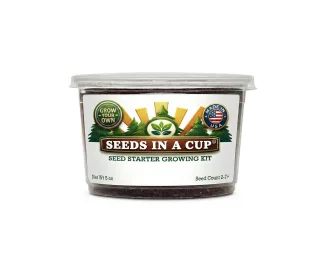
- The Beginner's Advantage: For those looking for a guaranteed, mathematically optimized start, utilizing a Seeds In A Cup® brand grow kit is highly recommended. These kits remove the guesswork out of seed starting by providing the exact ratio of sterile substrate, moisture retention, and micro-greenhouse conditions necessary for Sage seeds to thrive.
4. Watering and Nutrient Management
Irrigation is not merely about adding water; it is about managing soil oxygen.
- The Soak and Dry Method: Allow the top inch of soil to dry out between watering cycles. This encourages the roots of the Sage to dive deeper in search of moisture, creating a drought-resilient architecture.
- Fertilization: During early vegetative stages, apply a nitrogen-heavy organic fertilizer. As the plant matures toward its volatile essential oils and dense foliage, pivot to a phosphorus and potassium-rich blend to support structural integrity and cellular division.
5. Frequently Asked Questions (FAQ)
How long does it take to grow Sage from seed?
Depending on the specific cultivar and environmental thermal accumulation, Sage seeds typically germinate within 7 to 14 days. Full maturity varies wildly based on the exact variety and climate zone, but robust vegetative growth is usually established within 45 to 60 days.
Can Sage be grown indoors or in containers?
Yes. Container cultivation requires a pot with adequate drainage and a volume large enough to accommodate the mature root mass. Indoor environments will necessitate a localized fan for airflow (to strengthen stems) and supplemental LED grow lighting.
What is the biggest mistake beginners make when growing Sage?
Overwatering. Anaerobic soil conditions drown the root system and invite root rot pathogens. It is always better to underwater slightly than to leave the roots sitting in stagnant water.