Start growing
Very easy; thrives in full sun and almost any soil. Self-seeds readily.
GROW SOMETHING WONDERFUL
Rudbeckia hirta
Your guide to planting, growing, and getting to know this plant.
THE PLANT NOTEBOOK
Very easy; thrives in full sun and almost any soil. Self-seeds readily.
The Seeds In A Cup® methodology highlights 'Pioneer Species' behavior—watching these hardy plants thrive in 'disturbed' cup soil.
By seed or division.
Blooms from early summer to the first frost. Short-lived perennial or biennial.
Prairies, meadows, and roadsides.
High heat and drought tolerance; handles pollution well.
Powdery mildew and septoria leaf spot.
Safe; some individuals may experience skin irritation from the hairy stems.
A hardy wildflower with golden-yellow petals surrounding a dark brown/black central cone.
‘Indian Summer’, ‘Goldstrum’.
State flower of Maryland. iconic prairie restoration plant. long-lasting cut flower
Native to Central North America; naturalized across the continent.
Abundant and secure.
Named after the Rudbeck family; ‘hirta’ means hairy, referring to the stems and leaves.
Associated with an 18th-century poem by John Gay about a sailor's love for his 'Black-Eyed Susan'.
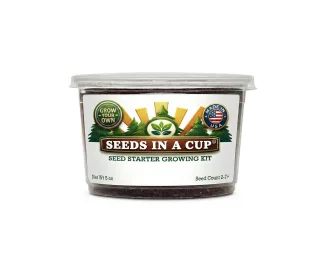
Seed Germination Kit
USD 10.99
Currently unavailable
Rudbeckia hirta