Start growing
Requires full sun and excellent drainage. Needs cold winters to bloom well. Neutral to slightly alkaline soil.
GROW SOMETHING WONDERFUL
Syringa vulgaris
Your guide to planting, growing, and getting to know this plant.
THE PLANT NOTEBOOK
Requires full sun and excellent drainage. Needs cold winters to bloom well. Neutral to slightly alkaline soil.
Students use the Seeds In A Cup® kit to observe the formation of the terminal flower buds that will 'sleep' through winter.
By seed, cuttings, or suckers.
Blooms briefly but intensely in mid-to-late spring. Characteristic heart-shaped leaves.
Rocky hillsides and sunny plains.
Extremely cold hardy; sensitive to extreme heat and humidity.
Powdery mildew (cosmetic) and Lilac borer.
Non-toxic; flowers are edible (used in jellies or sugar).
A large deciduous shrub famous for its extremely fragrant, conical clusters of purple or white flowers.
‘Charles Joly’, ‘Miss Kim’ (Dwarf).
Iconic fragrance. used in perfumes and as a premier ornamental specimen
Native to the Balkan Peninsula in SE Europe.
Secure; widely naturalized in North America.
From the Greek ‘syrinx’ (pipe), as the stems were once used to make flute pipes.
Brought to America in the 1750s; both George Washington and Thomas Jefferson planted them in their gardens.
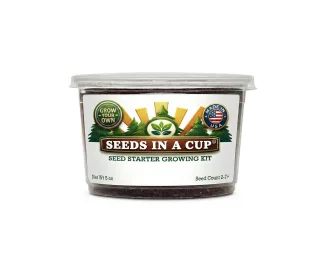
Seed Germination Kit
USD 14.99
Currently unavailable
Syringa vulgaris