Start growing
Prefers cool climates and full sun. Needs consistent soil moisture.
GROW SOMETHING WONDERFUL
Betula papyrifera
Your guide to planting, growing, and getting to know this plant.
THE PLANT NOTEBOOK
Prefers cool climates and full sun. Needs consistent soil moisture.
The Seeds In A Cup® Methodology involves surface-sowing the tiny, winged birch seeds on moist soil under the greenhouse lid.
By seed.
Short-lived pioneer species (80-140 years). Yellow catkins emerge in spring.
Moist soils on mountain slopes and near water.
Highly cold tolerant; very low heat tolerance (struggles south of Zone 6).
Bronze birch borer is a major threat in stressed trees.
Safe; inner bark is edible in emergencies.
A medium deciduous tree with iconic chalky white bark that peels in thin, horizontal papery strips.
‘Renaissance Reflection’, ‘St. George’.
Historically used for canoe building. sap can be boiled into syrup. wood used for toys and toothpicks
Northern North America (Canada and Northern USA).
Secure.
Latin ‘papyrifera’ meaning paper-bearing, referring to the peeling white bark.
Indigenous peoples used the waterproof bark to build canoes that were light enough to be carried between waterways (portage).
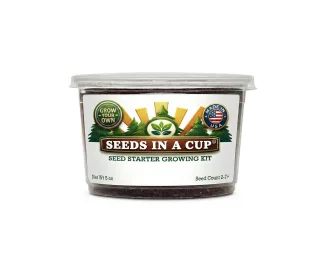
Tree Seed Grow Kit
USD 14.99
Currently unavailable
Betula papyrifera